Why Do I Need Ethereum to Withdraw USDT? Gas Fees Explained
Wondering why ETH is needed for some USDT withdrawals? Learn how Ethereum gas fees work, when ETH is required, and how to avoid common USDT withdrawal mistakes.
Why Do I Need Ethereum to Withdraw USDT? Gas Fees Explained
If you hold USDT and try to withdraw it using the Ethereum network, you may notice something confusing: you may need ETH in your wallet even though you are sending USDT.
Why would ETH be needed when the asset being transferred is USDT?
The answer is Ethereum's gas fee system.
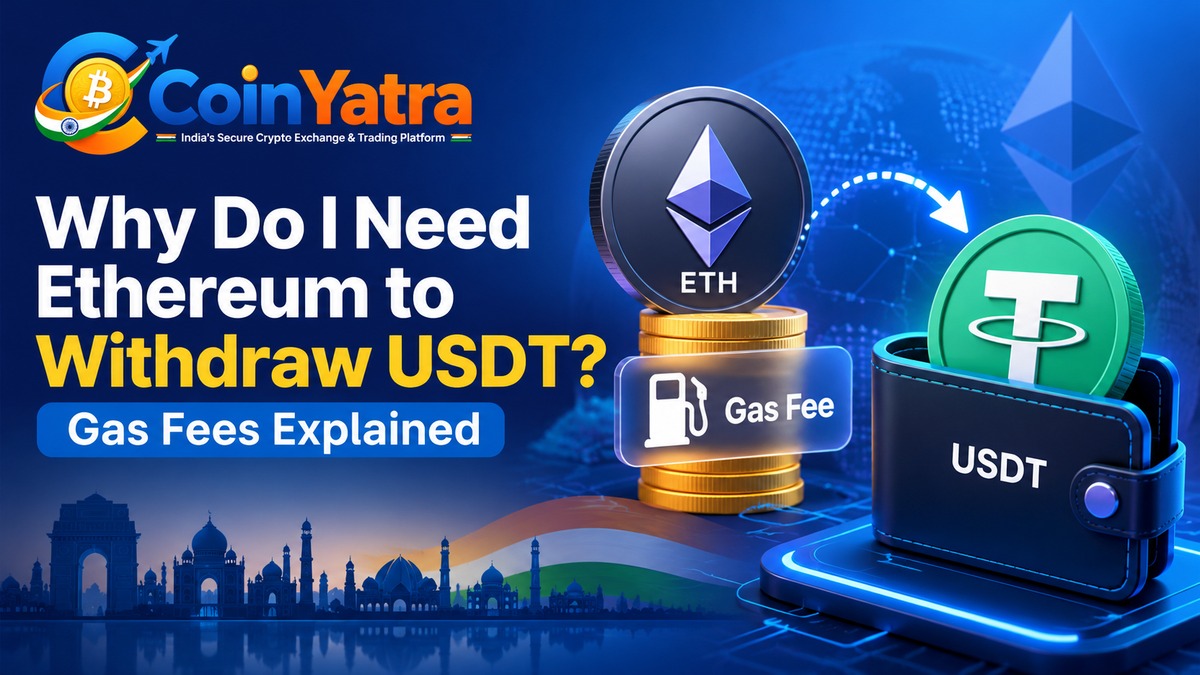
When USDT is transferred using the Ethereum network, the blockchain transaction requires network resources. The fee for using those resources is paid in ETH. In simple terms, USDT is the asset you are transferring, while ETH is used to pay the Ethereum network fee.
Understanding this difference can help you avoid failed transactions, unexpected delays and common crypto withdrawal mistakes.
Why Is ETH Needed to Withdraw USDT?
USDT exists on multiple blockchain networks. One version of USDT operates as a token on Ethereum.
When a USDT transfer takes place on Ethereum, the transaction is processed by the Ethereum network. The network charges a transaction fee, commonly referred to as a gas fee.
That fee is paid in ETH.
So the transaction can look like this:
USDT → Asset being transferred
ETH → Network fee used to process the transaction
You are not converting your USDT into ETH just to make the withdrawal. ETH is being used to pay the blockchain's transaction fee.
What Is an Ethereum Gas Fee?
Ethereum is a blockchain that processes transactions and smart-contract operations.
Every operation uses computational resources. Ethereum calls the mechanism used to pay for these resources gas.
A gas fee is therefore the cost of getting a transaction processed by the Ethereum network.
For a USDT transfer, the transaction may interact with the USDT token contract rather than simply transferring native ETH.
That means the transaction can require network resources even though the asset being transferred is USDT.
The fee is still paid using ETH.
Example: Sending USDT From an Ethereum Wallet
Imagine you have:
1,000 USDT
in an Ethereum-compatible wallet.
You want to send the USDT to another compatible wallet using the Ethereum network.
You have enough USDT, but your wallet contains:
0 ETH
The USDT balance itself does not automatically pay the Ethereum network fee.
You may therefore be unable to complete the transaction because the wallet does not have the ETH required for gas.
This is one of the most common sources of confusion for new crypto users.
Having enough USDT does not necessarily mean you have enough balance to cover the network fee.
Is ETH Always Required to Withdraw USDT?
No.
This is an important distinction.
USDT is available on multiple blockchain networks, and each network has its own transaction mechanism and fee structure.
For example, USDT can exist on different networks, and the native asset used to pay network fees can differ.
Therefore, you should always check which network you are using before making a withdrawal.
The exact requirements depend on:
The blockchain network selected
The wallet you are sending from
The receiving wallet or exchange
The supported networks on the destination
The fee structure of the platform
The current network conditions
Never assume that every USDT withdrawal requires ETH.
Why Does the Network Matter?
One of the biggest mistakes in crypto is treating USDT as though it exists on only one blockchain.
USDT is a token that is available across multiple networks.
When withdrawing USDT, you normally need to select a network supported by both the sending and receiving sides.
For example, an address or platform may support USDT on one network but not another.
The transaction may then fail, arrive incorrectly, or require additional recovery steps.
That is why users should always verify:
USDT asset → Network → Receiving address → Network support
before confirming a withdrawal.
USDT Network Fees and Exchange Fees Are Different
Another common source of confusion is the difference between a network fee and a platform withdrawal fee.
Network fee
This is associated with processing the transaction on the blockchain.
For an Ethereum-based USDT transfer, ETH is used for the Ethereum network's gas mechanism.
Platform withdrawal fee
An exchange or service may also charge a withdrawal fee according to its own fee structure.
The platform's fee and the blockchain's underlying network cost are not necessarily the same thing.
Before withdrawing, always check the actual amount you will receive and the fee shown on the platform.
For current CoinYatra fee information, refer to the CoinYatra Fees page rather than relying on old examples or third-party estimates.
Internal link:
https://coinyatra.com/fees
What Happens If You Have USDT but No ETH?
Suppose your Ethereum wallet contains:
500 USDT
but:
0 ETH
You may still have enough USDT for the transfer, but you may not have the native network balance necessary to pay the Ethereum transaction fee.
In that situation, the transaction may not be processed until the required network fee balance is available.
This is why experienced crypto users usually check both:
Token balance
and
Network-fee balance
before attempting a blockchain transaction.
Why Can the Required ETH Amount Change?
Ethereum network fees are not fixed forever.
The amount required for a transaction can change depending on network conditions and the transaction itself.
Factors can include:
Network activity
Current gas conditions
Transaction complexity
Wallet implementation
Platform fee policies
The type of operation being performed
A transaction during a period of higher network activity may cost more than the same type of transaction under different conditions.
Because of this, you should always check the current transaction details displayed by your wallet or platform before confirming the withdrawal.
Can I Avoid ETH Fees by Choosing Another USDT Network?
Sometimes another supported network may have a different fee structure.
However, this does not mean you should simply choose the cheapest-looking network.
The receiving wallet or exchange must support the same network.
For example, if you send USDT using one network while the destination expects another, you can create a serious transaction problem.
Always confirm all of the following before sending:
The asset is USDT.
The selected network is supported by the destination.
The destination address is correct.
The destination accepts deposits through that network.
The final amount and fee are understood before confirmation.
Never choose a network purely because the displayed fee looks lower.
Common USDT Withdrawal Mistakes
1. Assuming USDT itself pays the network fee
It does not necessarily work that way.
The blockchain's native fee mechanism determines what asset is required for the transaction.
2. Sending through the wrong network
This is one of the most serious mistakes.
USDT on one network is not automatically interchangeable with USDT on another network at the transaction level.
3. Checking only the USDT balance
A sufficient token balance does not guarantee that the wallet has enough native network balance for transaction fees.
4. Ignoring the destination network
Always make sure the destination supports the exact network you selected.
5. Copying an old fee estimate
Blockchain fees can change.
Use the current amount displayed by the wallet or platform before confirming the transaction.
How to Safely Withdraw USDT
A safer withdrawal process is simple:
Step 1: Check the USDT balance
Make sure you have enough USDT for the intended transfer.
Step 2: Confirm the network
Check which blockchain network the destination supports.
Step 3: Check the required network balance
If the selected network requires its native asset for transaction fees, make sure your wallet has enough of it.
Step 4: Verify the destination address
Copy and verify the wallet address carefully.
Step 5: Check the fee and final amount
Review the transaction fee and the amount that will actually be sent or received.
Step 6: Send a small test amount when appropriate
For an unfamiliar destination, a small test transaction can help confirm that the address and network are correct before sending a larger amount.
What Should I Check Before a USDT Withdrawal?
Before confirming any transaction, ask:
Which network am I using?
Does the receiving platform support that network?
What network asset is required for the transaction fee?
What withdrawal fee is being charged?
How much USDT will actually arrive?
Is the wallet address correct?
These checks take only a few minutes and can prevent expensive mistakes.
How CoinYatra Users Can Learn More About Crypto Withdrawals
CoinYatra's crypto withdrawal guide explains the broader withdrawal process, including important safety considerations when sending cryptocurrency.
Read:
Crypto Withdrawals Explained
https://coinyatra.com/blog/crypto-withdrawals-explained
For wallet address safety, see:
Crypto Wallet Addresses: How to Send Crypto Safely
https://coinyatra.com/blog/crypto-wallet-addresses-how-to-send-safely
For general crypto fee information:
Crypto Trading Fees Explained
https://coinyatra.com/blog/crypto-trading-fees-explained
You can also review:
CoinYatra Fees
https://coinyatra.com/fees
Frequently Asked Questions
Why do I need ETH to withdraw USDT?
When USDT is transferred using the Ethereum network, the transaction requires Ethereum network resources. The network fee is paid in ETH, even though the asset being transferred is USDT.
Can I withdraw USDT without ETH?
It depends on the network being used and the wallet or platform involved. Ethereum-based USDT transfers generally require the appropriate Ethereum network fee balance.
Is USDT the same on every blockchain?
No. USDT can exist on multiple blockchain networks. Always confirm that the sending and receiving sides support the same network.
Why did my USDT transaction fail even though I had enough USDT?
A possible reason is insufficient balance for the required network fee. A token balance and a network-fee balance are not necessarily the same thing.
Are Ethereum gas fees fixed?
No. Network fees can change based on network conditions and transaction requirements.
Should I choose a network only because it has a lower fee?
No. The receiving wallet or exchange must support the selected network. A lower fee is not useful if the destination does not support that network.
Final Takeaway
The simple explanation is:
USDT is the cryptocurrency you are transferring. ETH may be the asset required to pay the Ethereum network fee.
That is why a wallet can contain enough USDT for a transaction but still be unable to send it when the required network-fee balance is missing.
Before every USDT withdrawal, check the network, destination compatibility, wallet balance, transaction fee and final amount.
Understanding these details can make crypto transfers safer and help prevent avoidable withdrawal problems.