Crypto Transfer Fees in India: Network Fees, Exchange Fees and P2P Costs Explained
Learn how crypto transfer fees work in India, including blockchain network fees, exchange withdrawal fees, P2P costs, spreads and other charges when sending cryptocurrency.
Crypto Transfer Fees in India: Network Fees, Exchange Fees and P2P Costs Explained
Crypto transfers can look simple on the surface: enter a wallet address, choose an amount and click send.
But the amount you actually pay can depend on several different types of charges.
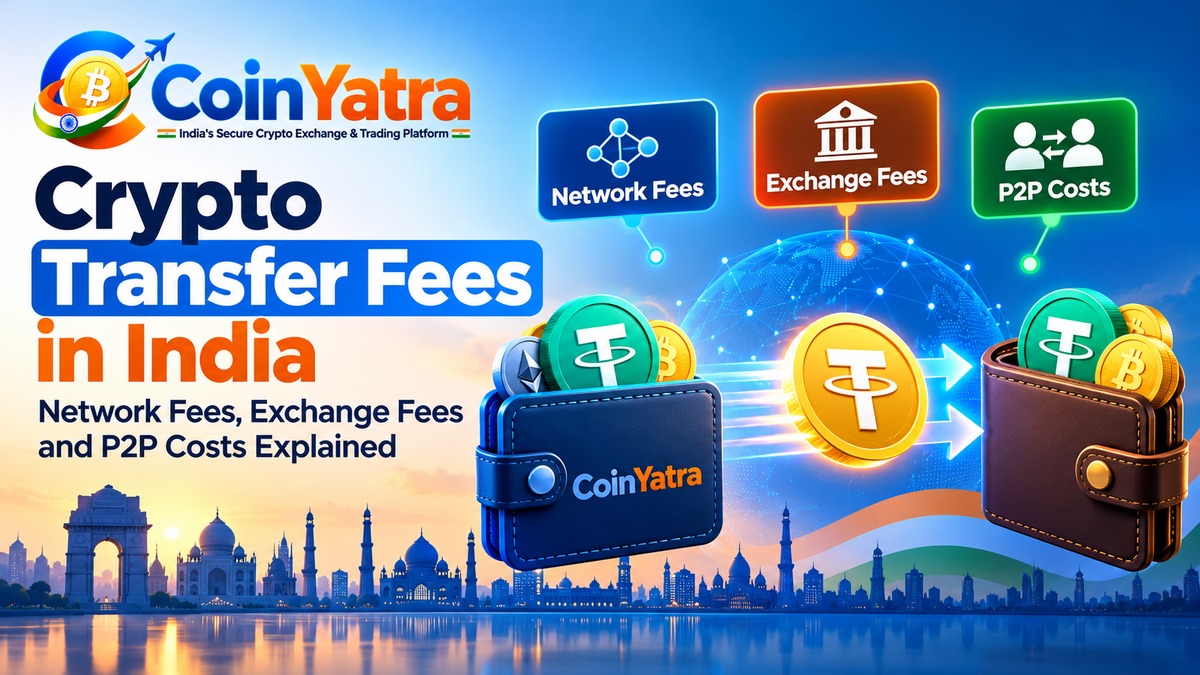
A crypto transaction may involve a blockchain network fee, an exchange withdrawal fee, a conversion spread, or costs associated with a P2P transaction. These charges are not always the same, and they should not be treated as one single “crypto transfer fee.”
Understanding the difference can help you compare platforms, estimate your final received amount and avoid unexpected costs.
This guide explains the main types of crypto transfer and transaction costs users in India should understand.
What Are Crypto Transfer Fees?
Crypto transfer fees are the costs associated with moving cryptocurrency from one wallet, exchange account or platform to another.
The fee can come from different sources depending on how the transaction is made.
For example:
Wallet → Wallet
may involve a blockchain network fee.
While:
Exchange → External Wallet
may involve both the underlying network cost and a platform withdrawal fee.
A P2P transaction can involve a different cost structure altogether, such as an exchange-rate difference or other platform charges.
The first step is therefore to identify what type of transaction you are actually making.
The Main Types of Crypto Transfer Fees
There are several common types of costs to understand.
1. Blockchain Network Fees
A blockchain network may charge a transaction fee for processing an on-chain transfer.
The fee is associated with the network rather than the value of the cryptocurrency being sent.
For example, sending a token on one blockchain may require payment of that network's transaction fee through its native fee mechanism.
The exact amount can vary depending on the network and current conditions.
2. Exchange Withdrawal Fees
When withdrawing cryptocurrency from an exchange or platform to an external wallet, the platform may apply a withdrawal charge.
This is separate from understanding the blockchain itself.
A platform may use its own withdrawal-fee structure based on:
Asset
Network
Transaction conditions
Platform policy
Withdrawal requirements
The displayed withdrawal fee should therefore always be checked before confirming the transaction.
For current CoinYatra fee information:
3. Trading Fees
Trading fees apply when you buy or sell an asset on a trading platform.
These are different from blockchain transfer fees.
For example:
Buy USDT → Trading fee
and later:
Withdraw USDT → Withdrawal/network-related cost
These are two separate parts of the transaction journey.
Learn more:
4. P2P Costs and Price Differences
P2P transactions can have a different pricing structure from standard spot-market transactions.
In a P2P market, users may see different offers from different participants.
The quoted price may differ because of factors such as:
Supply and demand
Payment method
Offer liquidity
Market conditions
Seller or buyer pricing
Platform conditions
This means a user should not evaluate P2P costs only by looking for a line item labelled “fee.”
Sometimes the cost can be reflected in the difference between the offered price and another market reference price.
For more information about P2P:
What Is Crypto P2P and How Does It Work?
Network Fees vs Exchange Fees
One of the most common crypto fee mistakes is assuming that a blockchain fee and an exchange fee are the same thing.
They are not.
Blockchain network fee
Paid for processing a blockchain transaction.
Exchange or platform fee
Charged according to the platform's own pricing structure.
Trading fee
Charged when buying or selling an asset through a trading system, where applicable.
P2P pricing difference
May appear through differences between individual offers and broader market pricing rather than a simple transfer-fee line.
Understanding which category applies makes it much easier to compare the true cost of a transaction.
Why Do Crypto Transfer Fees Change?
Crypto fees are not necessarily fixed.
Several factors can influence what you pay.
Network Activity
Some blockchain networks experience changes in demand for transaction processing.
When activity changes, the cost of processing a transaction can also change.
Blockchain Design
Different networks use different transaction models and fee mechanisms.
A transaction on one blockchain may therefore have a very different fee structure from a similar transaction on another.
Transaction Type
A simple transfer can have different requirements from a more complex blockchain operation.
Platform Policies
Exchanges and other crypto services may use their own withdrawal or transaction fee schedules.
Asset and Network
Even when the asset name is the same, such as USDT, the network used for the transfer can affect the fee structure.
Why USDT Transfer Fees Can Be Confusing
USDT is one of the cryptocurrencies that can exist across multiple blockchain networks.
That means:
USDT is not always using the same network.
A user may therefore see different fee requirements depending on the selected network.
For example, an Ethereum-based USDT transaction is not the same as a USDT transaction on another supported blockchain.
This is why you should always verify:
Asset
Network
Destination
Network compatibility
Fee
Final amount
before confirming a transfer.
For related reading:
Why Do I Need Ethereum to Withdraw USDT? Gas Fees Explained
How to Calculate the Real Cost of a Crypto Transfer
Looking only at the displayed transfer fee is not always enough.
Instead, think about the transaction as:
Total transaction cost
Network fee + platform fee + trading/conversion cost + spread + other applicable charges
Not every transaction will have every component.
For example, a simple wallet transfer may primarily involve a network fee.
An exchange withdrawal could involve:
Withdrawal fee + underlying network-related cost
A crypto sale may involve:
Trading/conversion cost + spread + withdrawal or settlement cost
The exact combination depends on the transaction.
Example: Sending USDT From an Exchange
Suppose you have:
1,000 USDT
on an exchange.
You want to transfer it to an external wallet.
Before confirming, check:
Step 1 — Network
Which blockchain network are you using?
Step 2 — Withdrawal fee
Does the exchange display a withdrawal charge?
Step 3 — Network requirement
Does the selected network require a native asset balance?
Step 4 — Final received amount
How much USDT will actually reach the destination?
The important number is not simply:
“How much is the fee?”
The better question is:
“How much will arrive after all applicable costs?”
Example: Selling USDT for INR
A similar principle applies when converting USDT into INR.
You may see a quoted USDT price, but your actual result can depend on:
Current market price
Spread
Trading or conversion fee
Withdrawal or settlement costs
Transaction method
For the current USDT-to-INR market:
And for selling USDT in India:
Are Crypto Transfer Fees the Same on Every Exchange?
No.
Different platforms can use different fee structures.
One platform may display a fixed withdrawal charge for a particular asset or network.
Another may use a different fee schedule.
Some services may also change their pricing based on their own policies and transaction infrastructure.
That is why you should compare the actual final cost rather than assuming all exchanges charge the same amount.
How to Compare Crypto Transfer Costs
When comparing two platforms, use the same transaction scenario.
For example:
Asset: USDT
Network: Same network
Amount: Same amount
Then compare:
Platform A
Trading/conversion cost
Withdrawal fee
Expected received amount
Platform B
Trading/conversion cost
Withdrawal fee
Expected received amount
This is much more useful than simply comparing one fee number.
Crypto Transfer Fees vs P2P Costs
P2P transactions deserve separate consideration.
In P2P trading, the cost may be reflected in the rate offered by an individual buyer or seller.
For example, two offers might show different INR prices for the same asset.
The higher-priced offer is not automatically more expensive.
You should consider:
Price
Transaction amount
Payment method
Timing
Any applicable platform charges
Settlement conditions
The relevant question is:
How much crypto do I give, and how much INR do I actually receive?
For more information:
How to Reduce Unnecessary Crypto Transfer Costs
You cannot always eliminate network or platform costs, but you can reduce avoidable expenses by planning the transaction carefully.
Check the network before sending
Do not select a network only because the displayed fee looks low.
The destination must support the same network.
Compare the final amount
Look at how much the destination will actually receive.
Avoid unnecessary conversions
Each additional conversion can introduce another spread or fee depending on the platform.
Check fees before confirming
Never rely on an old screenshot or previous transaction.
Review the current fee shown at the time of the transaction.
Common Crypto Fee Mistakes
Mistake 1: Confusing network fees with exchange fees
A blockchain fee and platform fee are not the same thing.
Mistake 2: Checking only the fee percentage
A percentage does not always tell you the final amount you will receive.
Mistake 3: Ignoring the network
USDT, for example, can exist on multiple blockchain networks.
Mistake 4: Assuming all exchanges use the same fees
They don't.
Mistake 5: Looking only at headline rates
A better rate can still result in a worse final amount after spreads and charges.
Mistake 6: Forgetting the withdrawal stage
The cost of buying crypto and the cost of later withdrawing it are separate considerations.
Is a Higher Crypto Fee Always Bad?
Not necessarily.
A transaction should be judged by its overall value and final outcome, not simply by one fee number.
A slightly higher visible fee may still result in a better transaction if:
The rate is better
The spread is lower
The process is more suitable
The settlement is more convenient
The final amount received is higher
Similarly, a platform advertising a very low fee does not automatically mean the transaction is cheaper.
Always compare the entire transaction.
How to Check Crypto Fees Before a Transaction
Before pressing the final confirmation button, review:
Asset
What cryptocurrency are you sending?
Network
Which blockchain network are you using?
Amount
How much are you sending?
Fee
What fee is being charged?
Destination
Is the receiving address correct?
Final amount
How much will actually arrive?
Settlement
When and where will the resulting asset or INR become available?
These checks can prevent many avoidable mistakes.
Crypto Fees in India: What Users Should Remember
For Indian crypto users, the core concepts are the same as in any other market, but INR conversion can add another layer to the calculation.
When you buy, sell, transfer or withdraw cryptocurrency, think about the transaction as a complete journey rather than one isolated fee.
For example:
Buy crypto
→ trading/conversion cost
→ hold crypto
→ transfer crypto
→ network/withdrawal cost
→ convert to INR
→ settlement cost where applicable
Looking at the entire path helps you understand the real cost of the transaction.
How CoinYatra Users Can Learn More About Fees
CoinYatra has several resources covering different parts of the crypto transaction journey.
Crypto Trading Fees Explained
Crypto Withdrawals Explained
USDT to INR
Sell USDT in India
CoinYatra Fees
P2P Crypto Exchange India
These pages cover different parts of the crypto transaction process, so choose the resource that matches what you are trying to do.
Frequently Asked Questions
What are crypto transfer fees in India?
Crypto transfer fees are costs associated with moving cryptocurrency between wallets, exchanges or platforms. Depending on the transaction, these may include blockchain network fees, exchange withdrawal fees and other applicable charges.
What is a blockchain network fee?
A blockchain network fee is the cost associated with having a blockchain process a transaction. The exact fee mechanism depends on the network being used.
Are crypto transfer fees and withdrawal fees the same?
Not necessarily. A withdrawal fee may be charged by a platform, while a network fee is associated with processing the transaction on the blockchain.
Why are USDT transfer fees different on different networks?
USDT can operate across multiple blockchain networks. Each network has its own transaction model and fee mechanism, so the cost can differ depending on the selected network.
Are P2P crypto transactions subject to fees?
P2P transactions can have different cost structures. The effective cost may be reflected in the offer price, spread or applicable platform charges rather than a simple transfer-fee line.
How can I reduce crypto transfer costs?
Compare the network, platform fees, spread, final received amount and transaction requirements before confirming a transfer. Avoid unnecessary transfers and conversions where appropriate.
Are crypto fees fixed?
Not always. Blockchain fees can change with network conditions, while exchange and platform fees can depend on the provider's current fee structure.
Should I choose the network with the lowest fee?
Not automatically. The receiving platform or wallet must support the selected network. A low fee is not useful if the destination cannot properly receive the asset through that network.
Final Takeaway
Crypto transfer costs are not limited to one simple fee.
Depending on what you are doing, the total cost may include a blockchain network fee, exchange withdrawal fee, trading or conversion cost, spread or P2P pricing difference.
The safest way to compare transactions is to look beyond the headline fee and ask:
How much am I paying in total, and how much will I actually receive?
Before sending or selling crypto, always verify the asset, network, destination, applicable fees and final amount.
A few seconds spent checking the transaction details can help prevent unnecessary costs and avoidable transfer mistakes.