What Is Crypto P2P and How Does It Work?
How peer-to-peer crypto trading works, including escrow, INR payments, order steps, and important safety tips for beginners.
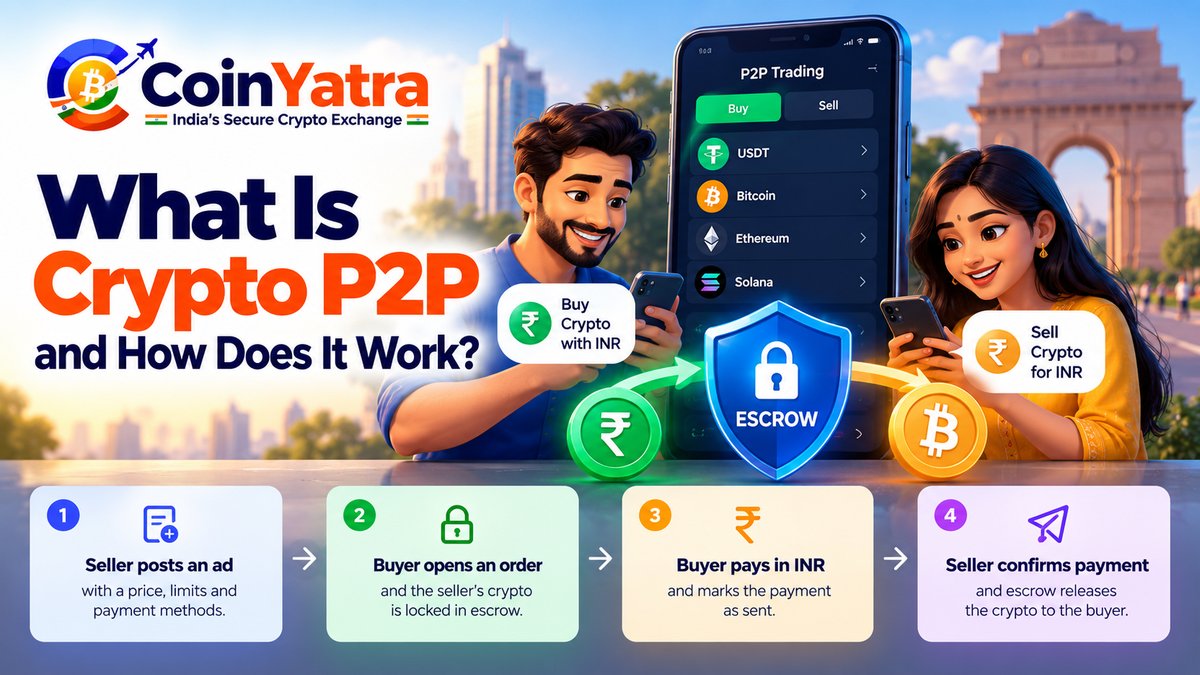
Crypto P2P, or peer-to-peer trading, allows people to buy and sell cryptocurrency directly with each other instead of using a traditional order book. In an INR P2P transaction, one person can sell crypto while another person pays in Indian rupees using an agreed payment method such as UPI or bank transfer.
A P2P platform can provide the marketplace, payment instructions, escrow protection and dispute process that help both sides complete the transaction.
This guide explains how crypto P2P works, what escrow means, how a typical transaction works on CoinYatra, and the important safety checks beginners should understand before trading.
What Is Crypto P2P Trading?
Crypto P2P means peer-to-peer cryptocurrency trading. Instead of buying crypto through a conventional spot market where orders are matched automatically, buyers and sellers can interact through individual advertisements or offers.
A seller can create an advertisement specifying:
The cryptocurrency they want to sell
Their price
Minimum and maximum order amount
Accepted payment methods
Other conditions for the transaction
A buyer can then choose an available offer and start an order based on the seller's terms.
For INR-based P2P trading, the cryptocurrency and rupee payment are exchanged between the two parties while the platform provides the transaction infrastructure.
How Does Crypto P2P Work?
The basic process is straightforward.
1. A seller creates a P2P advertisement
The seller chooses the cryptocurrency they want to sell and sets the price, order limits and accepted payment methods.
For example, a seller may create an offer to sell USDT and accept INR payments through UPI or bank transfer.
2. A buyer chooses an offer
The buyer reviews the available offers and selects one that matches their requirements.
Before starting an order, the buyer should check the cryptocurrency, price, minimum and maximum limits and payment method.
3. The cryptocurrency is placed in escrow
Once the order begins, the seller's cryptocurrency is locked in escrow.
Escrow is an important part of P2P trading because it prevents the seller from simply taking the buyer's payment while keeping the cryptocurrency.
The crypto remains locked while the INR payment is being completed.
4. The buyer pays in INR
The buyer sends the required INR payment using the payment method specified in the order.
The buyer should follow the payment instructions shown inside the order and complete the payment within the specified payment window.
5. The buyer marks the payment as sent
After completing the payment, the buyer marks the order accordingly.
The buyer should only mark payment as sent after actually completing the payment.
6. The seller confirms the payment
The seller checks their account and confirms that the INR payment has actually arrived.
The seller should not rely only on screenshots, messages or payment claims. The actual receipt of funds should be verified.
7. Escrow releases the cryptocurrency
Once the required conditions are satisfied, the cryptocurrency is released from escrow to the buyer.
This completes the P2P transaction.
How P2P Escrow Protects a Trade
Escrow is one of the most important concepts to understand before using a P2P marketplace.
Without escrow, a buyer could send INR and the seller could refuse to send the cryptocurrency. Alternatively, a seller could transfer cryptocurrency first and risk not receiving the payment.
With escrow, the seller's crypto is held by the platform during the transaction.
The basic flow is:
Seller's crypto → Escrow → Buyer
The buyer's INR payment is completed separately according to the order instructions. Once the payment is confirmed and the order requirements are satisfied, the crypto can be released.
Escrow does not eliminate every possible risk, but it provides an important layer of protection for the transaction.
How P2P Trading Works on CoinYatra
On CoinYatra, P2P trading allows verified users to buy and sell supported cryptocurrencies using INR.
The general process is:
Seller creates an ad → Buyer opens an order → Crypto enters escrow → Buyer pays INR → Seller confirms payment → Crypto is released
CoinYatra requires identity verification to be approved before a user can trade through P2P.
P2P orders currently range from ₹500 to ₹25,00,000, with each advertisement setting its own minimum and maximum order limits within the supported range.
Available P2P cryptocurrencies currently include:
Bitcoin (BTC)
Ethereum (ETH)
USDT on BSC
USDT on ERC-20
Solana (SOL)
Payment methods and availability can depend on the specific advertisement.
What Is the Difference Between P2P and Spot Trading?
P2P and spot trading are different ways of buying and selling cryptocurrency.
In spot trading, buyers and sellers place orders into an order book. The platform's trading engine matches compatible buy and sell orders.
In P2P trading, users select or create individual offers and settle the INR payment according to the terms of that particular order.
For example:
Spot trading:
You place a BTC/INR market or limit order and the exchange matches it through the order book.
P2P trading:
You select a seller's BTC offer, pay the seller in INR using the specified method, and receive the crypto after the transaction requirements are completed.
Neither process should be assumed to have the same price, fees, liquidity or execution conditions.
Why Can P2P Prices Be Different?
P2P prices can differ from the price shown on a spot market or another crypto price reference.
Individual sellers set their own offers, and prices can be influenced by factors such as:
Supply and demand
Payment method
Order size
Market conditions
Seller liquidity
Transaction costs
Speed and convenience of payment
For this reason, buyers should compare available offers rather than assuming that every P2P advertisement will have exactly the same price.
What Payment Methods Can Be Used?
P2P advertisements can specify which payment methods a seller accepts.
On CoinYatra P2P, sellers can specify payment methods such as UPI or bank transfer.
The payment method should always match the method shown in the active order.
Do not send payment through a different method simply because another method appears more convenient.
Important Safety Rules for Crypto P2P
P2P trading involves real financial transactions, so users should take basic precautions.
Verify the order details
Before paying, check:
Cryptocurrency
Amount
INR price
Total payment
Payment method
Seller details
Order limits
Payment deadline
Pay only to the details shown in the order
Do not send money to a different account based on a message or external request.
If the payment details change unexpectedly, stop and review the order before continuing.
Never rely on screenshots
A payment screenshot does not prove that money has reached your bank account.
A seller should verify the actual receipt of INR before releasing cryptocurrency.
Do not release crypto early
If you are the seller, do not release cryptocurrency merely because the buyer says they have paid.
Verify the actual payment first.
Keep communication inside the platform
Keeping communication inside the order chat can provide a useful record if there is a dispute.
Avoid moving an active transaction to external messaging platforms when it is not necessary.
Check the blockchain network
If you are receiving or sending cryptocurrency outside the P2P transaction, make sure the blockchain network is correct.
For example, USDT can exist on multiple networks. Sending funds using an unsupported or incorrect network can result in loss of funds.
What Happens If There Is a P2P Dispute?
Sometimes a buyer and seller may disagree about whether payment was made, whether funds were received or whether the order conditions were followed.
When a dispute occurs, either side can open a dispute through the platform.
On CoinYatra, the team reviews the relevant order while the cryptocurrency remains in escrow.
Users should provide accurate information and any relevant transaction evidence requested during the dispute process.
The best way to reduce disputes is to follow the order instructions exactly and keep the transaction inside the platform.
Common P2P Mistakes Beginners Should Avoid
Some mistakes can create unnecessary problems.
Sending payment before checking the order:
Always verify the active order details before making a payment.
Paying outside the specified instructions:
Use the payment details and method provided by the order.
Marking payment as sent without paying:
Only mark payment as completed after the INR payment has actually been made.
Releasing crypto after seeing a screenshot:
Verify the actual receipt of funds.
Ignoring the payment deadline:
Complete the transaction within the time specified by the order.
Trading outside the platform:
Moving a transaction outside the platform can remove important protections provided by the P2P system.
Is Crypto P2P Safe?
P2P trading can provide useful transaction protections when the platform uses mechanisms such as escrow, identity verification and dispute handling. However, users still need to follow safe trading practices.
Escrow protects the cryptocurrency during the transaction, but it does not mean users should ignore payment verification, order instructions or other security checks.
Before completing a P2P order, carefully review the offer and make sure you understand exactly what you are paying and receiving.
Final Thoughts
Crypto P2P provides a direct way for buyers and sellers to exchange cryptocurrency using INR. The process typically involves selecting an offer, locking the seller's crypto in escrow, completing the INR payment and releasing the cryptocurrency after the payment is confirmed.
Understanding escrow, payment verification, order limits and dispute procedures is especially important for beginners.
If you want to explore INR-based peer-to-peer cryptocurrency trading, you can learn more on the CoinYatra P2P exchange page.
This article is for educational and informational purposes only and is not investment, financial or legal advice. Cryptocurrency transactions involve risks. Always review the details of an order before confirming a transaction.